Blog

  • 15h ago 04…

    15h ago 04…

    15h ago 04.20 GMT Auction activity roars back after long weekend Auction activity has bounced back sharply this weekend, with 1,629 auctions scheduled. This is almost four times the 305 auctions held at the long weekend last week, and a jump on the 1,390 auctions that occurred at the same time last year. Based on results collected so far, CoreLogic’s summary found that the preliminary clearance rate was 69.7% across the country, but above the 59.4% actual rate in the final numbers. Across the capital cities: Sydney : 314 of 468 auctions with a preliminary clearance rate of 71.3%

    Melbourne : 489 of 643 auctions with a preliminary clearance rate of 69.3%

    Brisbane : 164 of 221 auctions with a preliminary clearance rate of 75%

    Adelaide : 101 of 153 auctions with a preliminary clearance rate of 86.1%

    Canberra : 123 of 135 auctions with a preliminary clearance rate of 39.8%

    Tasmania : One auction to be held.

    Perth: Eight auctions held. Share Updated at 04.37 GMT

    15h ago 04.11 GMT Why some economists go against the flow on RBA rate bet The Reserve Bank is widely tipped to become the first major central bank on Tuesday to U-turn from rate cuts to rate hikes in the post-Covid inflation era. A handful of economists are expecting the Reserve Bank of Australia to hold the cash rate steady at 3.6% when its board wraps up its first meeting of 2026 on Tuesday. The crux of his heterodox argument is that most analysts have focused on a rise in core inflation in the Australian Bureau of Statistics’ (ABS) long-running quarterly consumer price index series, the RBA’s preferred measure. But doing this ignores a downward trend in the ABS’s newly minted monthly data series, which shows inflationary pressures are more temporary than permanent, although the RBA has said it would pay less heed to the monthly measure while kinks were ironed out in the data. Money markets believe there is a high probability of a hike, implying a 70% chance of a 25-basis-point increase. While the decision dominates the week’s agenda, economists will also scrutinise building approvals data on Tuesday and Australia’s balance of trade, due Thursday. Federal politicians will grill RBA officials on their rate decisions on Friday, when its governor, Michele Bullock, deputy, Andrew Hauser, and three assistant governors front a committee hearing in Canberra. Wall Street investors are meanwhile trying to figure out what Donald Trump’s nomination to succeed the US Federal Reserve chair, Jerome Powell, will mean for interest rates. Its former governor Kevin Warsh should favour lower rates but stop short of more aggressive monetary easing linked to other potential nominees. – AAP Share Updated at 04.35 GMT

    15h ago 03.59 GMT Australia swelters through fourth hottest January on record Graham Readfearn Australians endured the country’s fourth-hottest January on record, with nationwide temperatures 1.9C above average, according to Bureau of Meteorology data. Last month marked the 24th consecutive January in which Australia’s mean temperature exceeded the long-term average from 1961 to 1990. View image in fullscreen Chart showing mean January temperatures in Australia from 1910 to 2026 Illustration: Bureau of Meteorology New South Wales had a standout month, with the data showing maximum temperatures were the second highest on the bureau’s record, which goes back to 1910. Maximums in South Australia were the third highest on record. Global heating caused mostly by burning fossil fuels has seen Australia warm by 1.5C since 1910. Australia experienced two heatwaves in January. Last week’s extreme heat set records tumbling in South Australia and Victoria, with multiple locations recording their highest-ever temperatures. Day and night, there’s no relief: five ways this heatwave is one of Australia’s worst on record Read more Share Updated at 04.20 GMT

    15h ago 03.43 GMT Laneway festival to host drug checking service as part of NSW trial Laneway festival will host an onsite drug checking service as part of an ongoing trial, it was confirmed on Sunday. Laneway will be the 11th festival to participate in the year-long trial when it begins next Sunday at Centennial Park. The service will be free and anonymous for festival patrons, allowing them to bring a small sample to be checked on-site by qualified health staff. Participants will be informed of the substance and its potency, along with guidance on how to reduce risks if they choose to use it. Trained peer workers are available on site to provide tailored guidance on risks, confidential support and information about additional support services. The NSW chief health officer, Dr Kerry Chant, said the service was intended to help people make informed decisions to reduce drug-related harm, but is not a guarantee of safety. This trial aims to inform individuals about substances, allowing them to avoid dangerous substances, discard high-risk drugs, make safer and more informed choices and potentially avoid serious health risks. Our priority is to reduce harm and keep people safe. The trial comes after the NSW Government’s Drug Summit concluded in December 2024. The summit’s report recommended a trial of music festival-based drug testing as a priority. Share Updated at 04.08 GMT

    16h ago 03.28 GMT ‘It’s not about democracy’: NSW attorney general doubles down on phrase ban The New South Wales state government remains determined to ban use of the phrase “globalise the intifada” despite most submissions to an inquiry about the move opposing the ban. When asked about the apparent opposition to the ban during a press conference on Sunday, the NSW attorney general, Michael Daley, contradicted a report that noted community opposition to the ban, saying, “I’m not sure that’s the case.” Daley noted that the inquiry received 700 submissions, of which 155 are public. It’s not about democracy. Just because a lot of people want to keep doing something that’s unacceptable doesn’t mean it’s the right thing for a government to do it. For more on this story, read the past report by Guardian Australia’s Penry Buckley: Inquiry calls for ban on ‘globalise the intifada’ in NSW – but only when used to incite hatred and violence Read more Share Updated at 03.40 GMT

    16h ago 03.07 GMT Josh Butler Greens blame government inaction on housing and price gouging for looming rate rise The Greens claim that Australians are facing an interest rate hike this week, in part, because the government hasn’t done enough to deal with rising housing prices and corporate price gouging. Greens leader Larissa Waters claims the Labor government should be doing more to manage those issues, in a bid to keep inflation down. If you’re a mortgage holder or a renter, you face being hit by the RBA to ‘fix’ the government’s ‘inflation problem’. Anyone with a mortgage will be giving more per month to the big banks. Renters are going to cop it as it will trickle down into unfair rent rises. It’s hard enough right now to get ahead, you shouldn’t be doing it harder. It shouldn’t be on you. This is about choices. The government’s priorities mean that you are copping the pain while banks, energy companies and property investors keep winning.” She added: If they’d taken them on, you wouldn’t be getting a rate rise. Greens’ economic spokesperson Nick McKim went on to say: This is about political choices, and Labor has chosen to protect corporate profits while ordinary people wear the pain. If the Reserve Bank increases interest rates the treasurer will wring his hands and pretend he shares people’s pain when in reality he is responsible for increasing pressure on the RBA to raise. Share Updated at 03.22 GMT

    16h ago 02.46 GMT NSW to remove ‘good character’ from being considered at sentencing hearings in nationwide first Offenders convicted of any crime will no longer be able to rely on glowing character references during sentencing under changes being introduced in New South Wales, in a move supported by survivors of sexual abuse but which others say could limit defendants’ rights. On Wednesday, the state government will become the first nationwide to introduce legislation to remove “good character” from being considered at sentencing hearings, when judges hear about someone’s prior record, general reputation and any positive contributions to society as mitigating factors. It follows a recommendation from a NSW sentencing council review released on Sunday, which was commissioned in April 2024 after a campaign by Your Reference Ain’t Relevant to remove good character references during sentencing for child sex offenders. For more on this story, read the full report by Guardian Australia’s Penry Buckley: NSW to remove ‘good character’ from being considered at sentencing hearings in nationwide first Read more Share Updated at 03.22 GMT

    17h ago 02.29 GMT Victoria flips Metro Tunnel’s ‘big switch’ as new services begin Sunday marks the day Melbourne’s $15bn Metro Tunnel will begin service in what the Victorian state government is calling “the big switch”. New timetables with extra services that use the Metro Tunnel – first announced in 2015 and opened in November – will begin from Sunday. The state government says the services will reduce congestion on the network and will also involve changes to bus routes in regional Victoria and inner-city Melbourne. View image in fullscreen State Library station is one of five new Metro Tunnel stations. Photograph: Erik Anderson/AAP Share Updated at 02.42 GMT

    17h ago 02.13 GMT ‘Changed me’: deputy leader back after cancer fight The NSW deputy premier is returning to work for the new school year after her second cancer battle in three years. Prue Car, who is also the minister for education and early learning, went on leave in June after revealing she had been diagnosed with breast cancer. The 43-year-old mother said it had been a difficult seven months, but she would be back at work on Monday to kick off the new school year. View image in fullscreen Prue Car. Photograph: Dan Himbrechts/AAP In a video message on Sunday, she said the experience had “certainly changed me in so many ways”. What hasn’t changed is my unwavering commitment to deliver for the people of NSW, for this beautiful community I represent here in western Sydney, as well as continuing our program in education. I can’t wait to get back to work. Car entered state parliament in 2015 for the western Sydney seat of Londonderry and has been deputy premier since Labor won government in March 2023. The NSW MP remained deputy premier during her treatment but stepped back from her ministerial duties in education and early learning and western Sydney, handing the reins to fellow minister Courtney Houssos. It was Car’s second major health battle, having taken leave in 2022 after an unrelated kidney cancer diagnosis. – AAP Share Updated at 04.00 GMT

    (Original content – AI unavailable)

    Source: Guardian

  • Jarrell Miller: 5 Surprising Facts About the Boxer’s Career

    Jarrell Miller: 5 Surprising Facts About the Boxer’s Career

    Jarrell Miller: The Unlikely Hero of the Boxing World

    Jarrell Miller is a name that has been making waves in the boxing world for quite some time now. Born on March 23, 1983, in Brooklyn, New York, Miller has been a professional boxer since 2015. In this article, we will delve into the world of Jarrell Miller and explore some surprising facts about his career.

    The Bizarre Incident: A Hairpiece Gone Wrong

    One of the most talked-about incidents in Jarrell Miller’s career was during his fight with Kingsley Ibeh at Madison Square Garden. Towards the end of the second round, Ibeh landed a series of punches, causing Miller’s hairpiece to come off. The American fighter finished the bout without it and went on to clinch victory by split decision.

    A Post-Fight Interview Like No Other

    In his post-fight interview, Miller revealed the shocking reason behind his hairpiece coming off. He claimed that he had used shampoo containing ammonium bleach, which caused his hair to fall out two days prior to the fight. Miller’s quick thinking and the help of his manager, who got him a new hairpiece, saved the day.

    The Career of Jarrell Miller: A Rise to Fame

    Jarrell Miller’s boxing career has been a rollercoaster ride, with his fair share of ups and downs. Born into a family of boxers, Miller was destined for greatness. He started training at a young age and quickly made a name for himself in the amateur circuit. After turning pro in 2015, Miller has had his fair share of victories and defeats.

    Miller’s Biggest Wins

    • Victory over Gerald Washington in 2018
    • Win over Bogdan Dinu in 2018
    • Split decision win over Ibeh in 2019

    The Future of Jarrell Miller: What’s Next?

    Despite the ups and downs, Jarrell Miller remains a force to be reckoned with in the boxing world. With a career spanning over five years, Miller has proven himself to be a contender in the heavyweight division. As he looks to the future, Miller is likely to take on some of the best boxers in the world, including Deontay Wilder and Anthony Joshua.

    Jarrell Miller’s Impact on the Boxing World

    Jarrell Miller may not be the most skilled boxer in the world, but he has made a significant impact on the boxing community. His willingness to take on all comers and his ability to come out on top in some of the toughest fights have earned him the respect of his peers. As Miller continues to rise through the ranks, he is sure to inspire a new generation of boxers and fans alike.

    Source: Independent

  • Stonehenge: 4 Groundbreaking Discoveries That Will Change Your Perspective

    Stonehenge: 4 Groundbreaking Discoveries That Will Change Your Perspective

    Stonehenge

    Stonehenge is an iconic landmark of endless fascination to tourists and researchers alike. There has been a lot of recent chemical analysis identifying where all the stones that make up the structure came from, revealing that many originated in quarries a significant distance away. So how were the stones transported to their current location?

    The Age-Old Question: Humans or Glaciers?

    One theory holds that glaciers moved the bluestones at least part of the way from Wales to Salisbury Plain in southern England, while others contend that humans moved them—although precisely how that was done has yet to be conclusively determined.

    New Evidence Points to Human Intervention

    Researchers at Curtin University have now produced the strongest scientific evidence to date that it was humans, not glaciers, that transported the stones, according to a paper published in the journal Communications Earth & Environment.

    The Power of Mineral Fingerprinting

    Curtin’s Anthony Clarke and co-authors relied on mineral fingerprinting to arrive at their conclusions. In 2024, Clarke’s team discovered the Stonehenge Altar Stone originated from the Orkney region in the very northeast corner of Scotland, rather than Wales. This time, they analyzed hundreds of zircon crystals collected from rivers close to the historic monument, looking for evidence of Pleistocene-era sediment.

    The Science Behind the Discovery

    Per Clarke, if the stones had “sailed” to the plain from further north, there would be a distinct mineral signature in that sediment as the transported rocks eroded over time. They didn’t find that signature, making it far more likely that humans transported the stone.

    The Implications of Human Intervention

    The discovery that humans transported the stones has significant implications for our understanding of the construction of Stonehenge. It suggests that the ancient builders were capable of complex engineering feats, and that the construction of the monument was a more sophisticated process than previously thought.

    The Importance of Preserving Our Cultural Heritage

    Stonehenge is not only an iconic landmark, but also a cultural treasure that holds great significance for our understanding of human history. The discovery that humans transported the stones serves as a reminder of the importance of preserving our cultural heritage, and the need for continued research and exploration into the mysteries of the past.

    The Future of Stonehenge Research

    With the discovery that humans transported the stones, researchers are now turning their attention to the next question: how did they do it? The answer lies in the details of the construction process, and the technology and techniques used by the ancient builders.

    The Role of Technology in Uncovering the Past

    Advances in technology have played a crucial role in uncovering the secrets of Stonehenge. From mineral fingerprinting to 3D scanning, these tools have allowed researchers to gain a deeper understanding of the monument and its construction.

    The Significance of Stonehenge in the Modern Era

    Stonehenge is not just a relic of the past, but also a living, breathing part of our cultural heritage. The discovery that humans transported the stones serves as a reminder of the importance of preserving our cultural heritage, and the need for continued research and exploration into the mysteries of the past.

    The Impact of Stonehenge on Popular Culture

    Stonehenge has had a profound impact on popular culture, from literature to music to film. The monument has been the subject of countless works of art, and continues to inspire and captivate audiences around the world.

    The Future of Stonehenge: Preserving Our Cultural Heritage

    As we look to the future, it is clear that Stonehenge will continue to be an important part of our cultural heritage. With the discovery that humans transported the stones, researchers are now turning their attention to the next question: how can we preserve this incredible monument for future generations?

    Source: Ars Technica

  • Donald Trump: 5 Shocking Secrets Revealed About Iran Tensions

    Donald Trump: 5 Shocking Secrets Revealed About Iran Tensions

    Donald Trump

    Donald Trump, the 45th President of the United States, has been at the forefront of escalating tensions with Iran. In a recent statement, Trump revealed that Iran was in ‘serious discussions’, but what does this mean for the region?

    The situation with Iran is a complex one, with a history of conflict and mistrust between the two nations. However, with Trump’s involvement, the stakes have been raised, and the world is watching with bated breath.

    Tensions Rise

    The tensions between the US and Iran have been building for months, with both sides trading barbs and accusations. The situation came to a head in January 2020, when a US drone strike killed top Iranian General Qasem Soleimani. Iran responded by launching a missile attack on US bases in Iraq, which sparked widespread condemnation and calls for calm.

    Trump’s involvement in the situation has been seen as a significant escalation, with many fearing that the US is heading towards war. However, Trump has maintained that he is committed to de-escalation and a peaceful resolution.

    The Role of Donald Trump

    So, what role has Donald Trump played in the escalating tensions with Iran? In a recent statement, Trump revealed that he had been in ‘serious discussions’ with Iran, but what does this mean for the region?

    Trump’s involvement in the situation has been seen as a significant factor in the escalation of tensions. His tough rhetoric and willingness to use military force have been seen as a major contributor to the current crisis.

    However, Trump has also been seen as a factor in de-escalating the situation. His commitment to a peaceful resolution and his willingness to listen to Iran’s concerns have been seen as a positive step towards finding a solution.

    The Impact of Donald Trump

    The impact of Donald Trump’s involvement in the escalating tensions with Iran has been significant. The situation has sparked widespread condemnation and calls for calm, with many fearing that the US is heading towards war.

    The situation has also had a major impact on global markets, with oil prices soaring in response to the escalating tensions. The situation has also had a major impact on the global economy, with many fearing that a war with Iran could have devastating consequences.

    However, despite the risks, many are optimistic that a peaceful resolution can be found. Trump’s commitment to de-escalation and a peaceful resolution has been seen as a positive step towards finding a solution.

    Conclusion

    In conclusion, the situation with Iran is a complex and sensitive one, with a history of conflict and mistrust between the two nations. However, with Donald Trump’s involvement, the stakes have been raised, and the world is watching with bated breath.

    The situation is a reminder of the complexities of international relations and the challenges of finding a peaceful resolution. However, with Trump’s commitment to de-escalation and a peaceful resolution, there is hope that a solution can be found.

    Key Takeaways

    • The situation with Iran is a complex and sensitive one, with a history of conflict and mistrust between the two nations.
    • Donald Trump’s involvement in the situation has been seen as a significant escalation, with many fearing that the US is heading towards war.
    • Trump’s commitment to de-escalation and a peaceful resolution has been seen as a positive step towards finding a solution.
    • The situation has sparked widespread condemnation and calls for calm, with many fearing that a war with Iran could have devastating consequences.
    • The situation has also had a major impact on global markets, with oil prices soaring in response to the escalating tensions.

    What’s Next?

    The situation with Iran is ongoing, with both sides continuing to trade barbs and accusations. However, with Trump’s commitment to de-escalation and a peaceful resolution, there is hope that a solution can be found.

    The situation is a reminder of the complexities of international relations and the challenges of finding a peaceful resolution. However, with Trump’s leadership and commitment to a peaceful resolution, there is hope that a solution can be found.

    Source: BBC

  • Sex Trafficking: 10 Alarming Statistics and Shocking Truths About Modern Slavery

    Sex Trafficking: 10 Alarming Statistics and Shocking Truths About Modern Slavery

    Sex Trafficking: A Global Epidemic

    Sex Trafficking is a grave human rights violation that affects millions of people worldwide. The woman told police she was at a party when she was drugged and assaulted by five boys, including Mr. Alexander, who is currently on trial for sex trafficking.

    The issue of sex trafficking is complex and multifaceted, involving organized crime groups, corrupt government officials, and vulnerable individuals. According to the United Nations, sex trafficking is a $150 billion industry, with millions of people trapped in modern slavery.

    Sex Trafficking is not just a issue in developing countries; it is also a problem in developed nations. In the United States, for example, sex trafficking is a significant concern, with thousands of cases reported each year. The issue is often linked to other forms of exploitation, such as labor trafficking and organ trafficking.

    The Statistics Are Alarming

    The statistics surrounding sex trafficking are shocking and disturbing. According to the Polaris Project, a non-profit organization that works to combat human trafficking, there are over 40 million victims of modern slavery worldwide. Of these, 25 million are trapped in forced labor, while 15 million are victims of sex trafficking.

    Sex Trafficking affects people of all ages, from children as young as 5 years old to adults in their 60s. Women and girls are disproportionately affected, making up 72% of all victims. The majority of victims are from low-income backgrounds and are more vulnerable to exploitation due to poverty, lack of education, and social isolation.

    The use of technology, such as social media and online platforms, has made it easier for traffickers to recruit and exploit victims. Online sex trafficking is a growing concern, with many cases involving children and minors. The anonymity of the internet has created a safe space for traffickers to operate, making it harder for law enforcement to track and prosecute them.

    The Truth About Sex Trafficking

    Sex Trafficking is often linked to other forms of exploitation, such as labor trafficking and organ trafficking. Victims of sex trafficking may also be forced to engage in other forms of exploitation, such as drug trafficking and arms trafficking.

    The issue of sex trafficking is often linked to power imbalances and social inequality. Women and girls from marginalized communities are more vulnerable to exploitation due to systemic inequalities and lack of access to education and economic opportunities.

    Sex Trafficking is a global issue that requires a collective response. Governments, civil society organizations, and individuals must work together to prevent trafficking, protect victims, and prosecute traffickers. This includes strengthening laws and policies, increasing awareness and education, and providing support services to victims.

    The Role of Technology in Combating Sex Trafficking

    Technology has the potential to be both a tool for and a solution to combating sex trafficking. Online platforms and social media can be used to raise awareness, provide support, and track and prosecute traffickers.

    However, technology can also be used by traffickers to recruit and exploit victims. Online sex trafficking is a growing concern, with many cases involving children and minors. The anonymity of the internet has created a safe space for traffickers to operate, making it harder for law enforcement to track and prosecute them.

    To combat online sex trafficking, governments and organizations must work together to develop and implement effective strategies. This includes strengthening laws and policies, increasing awareness and education, and providing support services to victims.

    One way to combat online sex trafficking is to use technology to track and identify traffickers. This can be done through the use of artificial intelligence and machine learning algorithms that can analyze online data and identify patterns of trafficking activity.

    Another way to combat online sex trafficking is to provide support services to victims. This includes providing access to counseling, medical care, and economic empowerment programs. By providing support services, organizations can help victims rebuild their lives and recover from the trauma of trafficking.

    The final way to combat online sex trafficking is to raise awareness and educate the public about the issue. This can be done through public awareness campaigns, educational programs, and community outreach initiatives. By raising awareness and educating the public, organizations can help prevent trafficking and protect potential victims.

    The Future of Combating Sex Trafficking

    Combating sex trafficking requires a collective response from governments, civil society organizations, and individuals. The future of combating sex trafficking depends on our ability to work together to prevent trafficking, protect victims, and prosecute traffickers.

    The use of technology has the potential to be a game-changer in combating sex trafficking. Online platforms and social media can be used to raise awareness, provide support, and track and prosecute traffickers.

    However, technology can also be used by traffickers to recruit and exploit victims. Online sex trafficking is a growing concern, with many cases involving children and minors. The anonymity of the internet has created a safe space for traffickers to operate, making it harder for law enforcement to track and prosecute them.

    To combat online sex trafficking, governments and organizations must work together to develop and implement effective strategies. This includes strengthening laws and policies, increasing awareness and education, and providing support services to victims.

    One way to combat online sex trafficking is to use technology to track and identify traffickers. This can be done through the use of artificial intelligence and machine learning algorithms that can analyze online data and identify patterns of trafficking activity.

    Another way to combat online sex trafficking is to provide support services to victims. This includes providing access to counseling, medical care, and economic empowerment programs. By providing support services, organizations can help victims rebuild their lives and recover from the trauma of trafficking.

    The final way to combat online sex trafficking is to raise awareness and educate the public about the issue. This can be done through public awareness campaigns, educational programs, and community outreach initiatives. By raising awareness and educating the public, organizations can help prevent trafficking and protect potential victims.

    Sex Trafficking is a complex issue that requires a comprehensive approach. By working together and leveraging the power of technology, we can combat sex trafficking and protect victims. It is time for action, and we must act now to prevent trafficking, protect victims, and prosecute traffickers.

    Source: NY Times

  • Waymo Funding Round: 7 Shocking Secrets…

    Waymo Funding Round: 7 Shocking Secrets…

    Waymo Funding Round: The Largest Investment in History

    Waymo Funding Round is a $16 billion deal that will value the robotaxi company at $110 billion.

    According to the Financial Times, Waymo has nearly finalized the new funding round, which will come from a mix of new and existing investors.

    More than three-fourths of the funding will reportedly come from Alphabet, Waymo’s parent company, where the robotaxi company was incubated as part of Alphabet’s ‘moonshot factory’ X.

    The FT reports that Waymo is bringing on new investors Dragoneer, Sequoia Capital, and DST Global, with existing backers Andreessen Horowitz and Abu Dhabi sovereign fund Mubadala also participating in the round.

    When contacted by TechCrunch, a company spokesperson said in a statement, ‘While we don’t comment on private financial matters, our trajectory is clear: with over 20 million trips completed, we are focused on the safety-led operational excellence and technological leadership required to meet the vast demand for autonomous mobility.’

    Waymo Funding Round: Challenges and Opportunities

    The company is expanding quickly, including with a recent launch in Miami.

    However, the growth has come with some challenges, including a number of robotaxis that stalled at traffic lights during a widespread San Francisco blackout.

    Waymo has more than $350 million in annual recurring revenue, according to the FT.

    The company last raised a $5.6 billion Series C in 2024, valuing the company at $45 billion.

    As Waymo continues to grow, it’s essential to understand the opportunities and challenges that come with it.

    With the new funding round, Waymo is poised to take the lead in the autonomous mobility market.

    But what does this mean for the company’s future, and how will it impact the industry as a whole?

    Waymo Funding Round: The Impact on the Industry

    The Waymo funding round is a significant development in the autonomous mobility market.

    As one of the leading companies in the space, Waymo’s success will have a ripple effect on the industry as a whole.

    The company’s focus on safety-led operational excellence and technological leadership will set the standard for other companies in the space.

    With the new funding round, Waymo is poised to take the lead in the autonomous mobility market.

    But what does this mean for the company’s future, and how will it impact the industry as a whole?

    The answer lies in understanding the opportunities and challenges that come with the Waymo funding round.

    As the company continues to grow, it’s essential to stay up-to-date on the latest developments in the autonomous mobility market.

    For more information on Waymo and the autonomous mobility market, check out the following links:

    Waymo’s Official Website

    Autonomous Mobility Market Trends

    The Future of Autonomous Mobility

    The Waymo funding round is a significant development in the autonomous mobility market.

    As one of the leading companies in the space, Waymo’s success will have a ripple effect on the industry as a whole.

    With the new funding round, Waymo is poised to take the lead in the autonomous mobility market.

    But what does this mean for the company’s future, and how will it impact the industry as a whole?

    The answer lies in understanding the opportunities and challenges that come with the Waymo funding round.

    As the company continues to grow, it’s essential to stay up-to-date on the latest developments in the autonomous mobility market.

    Source: TechCrunch

  • Waymo Funding: 7 Secrets Behind $110 Billion Valuation

    Waymo Funding: 7 Secrets Behind $110 Billion Valuation

    Waymo Funding: Unlocking the Secrets to $110 Billion Valuation

    Waymo funding has reached a new milestone with a $16 billion funding round valuing the robotaxi company at $110 billion, according to the Financial Times.

    More than three-fourths of that funding will reportedly come from a source close to home — Alphabet, where Waymo is a subsidiary.

    The company was incubated as part of Alphabet’s “moonshot factory” X, a hub for innovative projects.

    The FT reports that Waymo is bringing on new investors Dragoneer, Sequoia Capital, and DST Global, with existing backers Andreessen Horowitz and Abu Dhabi sovereign fund Mubadala also participating in the round.

    When contacted by TechCrunch, a company spokesperson said in a statement, “While we don’t comment on private financial matters, our trajectory is clear: with over 20 million trips completed, we are focused on the safety-led operational excellence and technological leadership required to meet the vast demand for autonomous mobility.”

    The company is expanding quickly, including with a recent launch in Miami.

    However, growth has come with some challenges, including a number of robotaxis that stalled at traffic lights during a widespread San Francisco blackout.

    Waymo has more than $350 million in annual recurring revenue, according to the FT.

    The company last raised a $5.6 billion Series C in 2024, valuing the company at $45 billion.

    Waymo is on a mission to revolutionize the transportation industry with its self-driving cars, and its massive funding round is a testament to the company’s potential.

    With its commitment to safety and technological leadership, Waymo is poised to become a leader in the autonomous mobility market.

    The company’s focus on operational excellence and innovation has enabled it to complete over 20 million trips, a significant milestone in its journey.

    As Waymo continues to expand its services, it will be interesting to see how the company addresses the challenges it faces, such as the San Francisco blackout incident.

    One thing is certain, however: Waymo’s massive funding round has solidified its position as a major player in the autonomous mobility market.

    With its $16 billion funding round, Waymo has achieved a valuation of $110 billion, making it one of the most valuable companies in the industry.

    The company’s success is a testament to the potential of autonomous mobility and the importance of investing in innovation.

    Waymo’s commitment to safety and technological leadership has enabled it to attract top investors, including Dragoneer, Sequoia Capital, and DST Global.

    The company’s recent launch in Miami is a significant step towards its goal of becoming a global leader in autonomous mobility.

    As Waymo continues to grow, it will be important for the company to maintain its focus on safety and innovation.

    The company’s success will depend on its ability to address the challenges it faces and to continue innovating in the autonomous mobility market.

    Waymo’s massive funding round has provided the company with the resources it needs to achieve its goals and to continue pushing the boundaries of autonomous mobility.

    The company’s commitment to safety and technological leadership has enabled it to attract top investors and to achieve a valuation of $110 billion.

    Waymo’s success is a testament to the potential of autonomous mobility and the importance of investing in innovation.

    The company’s recent launch in Miami is a significant step towards its goal of becoming a global leader in autonomous mobility.

    Source: TechCrunch

  • Blue Origin: Permanent Grounding of New Shepard Program Leaves Industry Stunned

    Blue Origin: Permanent Grounding of New Shepard Program Leaves Industry Stunned

    Blue Origin: The Rise and Fall of New Shepard

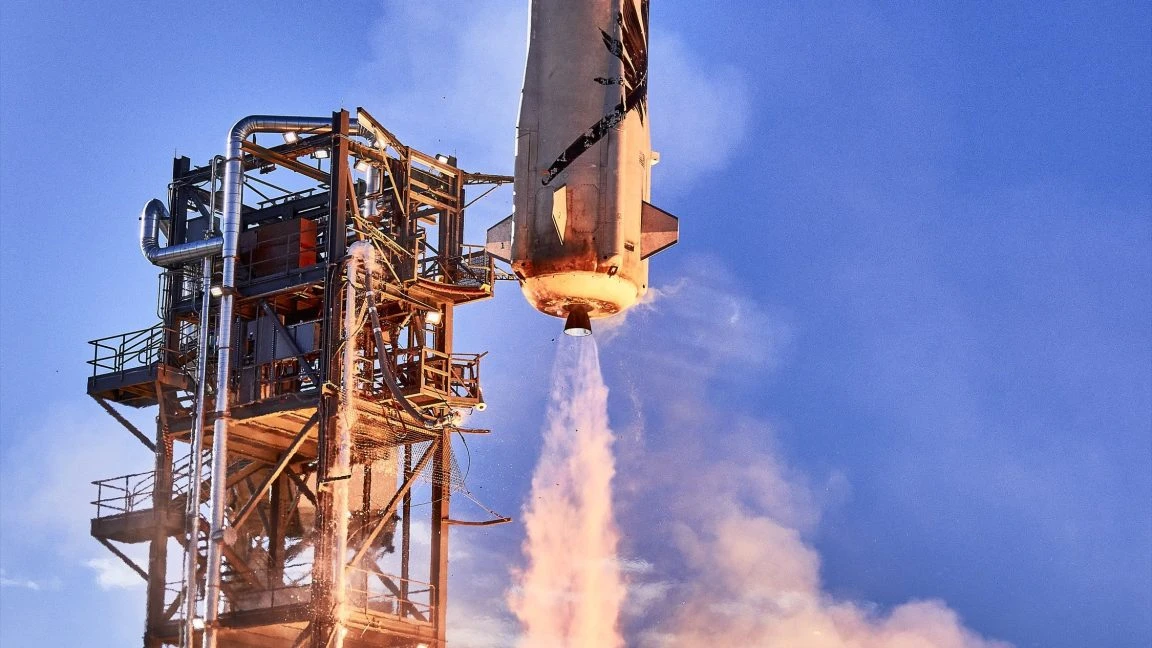
    Blue Origin, the private aerospace manufacturer and spaceflight services company founded by Jeff Bezos, has made the shocking decision to ‘pause’ its New Shepard program for the next two years.

    The move, which was announced in an internal email by CEO Dave Limp, marks the end of an era for the suborbital space tourism initiative, which has been in operation since April 2015.

    Key Statistics: New Shepard Program

    • 38 launches: The New Shepard program has made a total of 38 launches, all but one of which were successful.
    • 36 landings: The program has successfully landed 36 times, showcasing the reliability of the rocket and capsule combination.
    • 98 people to space: In its existence, the New Shepard program has flown 98 people to space, however briefly.
    • Over 200 scientific and research payloads: The program has launched more than 200 scientific and research payloads into the microgravity environment.

    So, why is Blue Origin ending the New Shepard program? The answer lies in the company’s long-term ambitions to build settlements in space, where millions of people will live, work, and help move industrial activity off Earth and into orbit.

    Why the Pause?

    The cancellation of the New Shepard program comes as a surprise to Blue Origin employees, who were expecting the program to continue. However, sources indicate that the program has been hemorrhaging money, and it remains a drain on Blue Origin’s efforts.

    Despite the program’s success in launching six people into space just eight days ago, the company has decided to redirect its resources toward further acceleration of its human lunar capabilities, inclusive of New Glenn.

    This move is a strategic one, as Blue Origin aims to be a part of the nation’s goal of returning to the Moon and establishing a permanent, sustained lunar presence.

    Implications for the Industry

    The permanent grounding of the New Shepard program has left the industry stunned, with many wondering what this means for the future of space tourism.

    While the program’s cancellation may be a setback for Blue Origin, it is also an opportunity for the company to refocus its efforts on more ambitious projects, such as building settlements in space.

    As the space industry continues to evolve, it will be interesting to see how Blue Origin’s decision to pause the New Shepard program will impact the landscape.

    One thing is certain, however – the future of space travel and exploration is looking brighter than ever, and Blue Origin’s decision to pause the New Shepard program is just the beginning of a new chapter in the company’s history.

    Conclusion

    In conclusion, the permanent grounding of the New Shepard program marks the end of an era for Blue Origin, but it also signals a new beginning for the company as it refocuses its efforts on more ambitious projects.

    As the space industry continues to evolve, it will be interesting to see how Blue Origin’s decision will impact the landscape, and what the future holds for space travel and exploration.

    Source: Ars Technica

  • 11 Shocking Truths About Phone Use in Schools: 2024 Update

    11 Shocking Truths About Phone Use in Schools: 2024 Update

    Phone Use in Schools: The Ultimate Guide

    Phone use in schools has become a significant concern for educational institutions worldwide. With the increasing number of students bringing their mobile devices to school, it’s essential to understand the impact of phone use on student behavior and academic performance.

    The Statistics

    A recent study found that 70% of students use their phones during class time, while another study reported that 60% of teachers believe that phone use affects student learning.

    Despite the growing concern, many schools lack clear policies and guidelines for phone use. As Tsang, a school administrator, notes, ‘We need statutory guidance. If every school is doing the same thing, then it’s fair and we’d be more likely to get the buy-in from the parents and the families that we need.’

    So, what are the consequences of phone use in schools? And how can educators create effective policies to manage mobile devices in the classroom?

    The Consequences of Phone Use

    Phone use in schools can lead to a range of negative consequences, including:

    • Distractions and decreased attention span
    • Decreased academic performance and grades
    • Increased stress and anxiety
    • Cyberbullying and online harassment

    To mitigate these risks, schools must develop clear policies and guidelines for phone use. This may include setting boundaries around device use, establishing consequences for misbehavior, and providing education on digital citizenship.

    By working together, educators and parents can create a safe and supportive learning environment that promotes academic success and social responsibility.

    Related News

    Source: BBC

  • Veterans of Israel’s Elite Forces Join Protests to Save Democracy

    Veterans of Israel’s Elite Forces Join Protests to Save Democracy

    Israel’s Veterans Unite Against Judicial Overhaul Plan

    In a sea of Israeli flags, Yiftach Golov holds one that looks a little different. Among the hundreds of thousands of protesters who took to the streets for the 13th week in a row on Saturday, Golov hoists a brown flag that represents a group called “Brother and Sisters in Arms.”

    They are veterans – many, like Golov, from elite forces – who now feel they are fighting on a new battlefield: To save Israeli democracy.

    “We believe this is our responsibility to go once again called to the flag of the nation to stop this madness to defend Israel,” Golov said, as he weaved his way through the protesters on Tel Aviv’s Kaplan street, between the high-rises that house many of Israel’s high tech companies.

    During the second intifada, in the early 2000s, Golov served in a special forces reconnaissance unit. He was never before particularly political, focusing more on getting his PhD in biophysics from Tel Aviv University.

    But when the protest movement against the Israeli government’s judicial overhaul plan began in January, Golov attended one a demonstration and soon became one of thousands of veterans, and now military reservists, who have taken up the cause as their new mission.

    Some, including elite Air Force reservists, have taken it a step further, threatening not to heed the call to train or even serve in protest of the government’s plans planned judicial changes, which would give the governing parties more control over Israel’s judiciary.

    A group from Brothers and Sisters in Arms protests by carrying a figure wrapped in the Israeli flag on a stretcher, the way they would carry a wounded comrade off the field.

    Others have taken to becoming some of the most active organizers and demonstrators. Last week, a group from Brothers and Sisters in Arms protested by carrying a figure wrapped in the Israeli flag on a stretcher, the way they would carry a wounded comrade off the field.

    While Golov says he has not taken the drastic step to refuse service, he understands the motivation.

    “We’re fighting for justice and liberty, just like the American story, that’s the values that that are being represented symbolized back when we look at our flag, that’s something that was lacking lacking for the last few decades. So basically, we reclaim the flag,” he said.

    Fellow members of the group, all wearing brown shirts with the organization’s logo, come up and say hello. They’re sprinkled all throughout the protests. One is even leading the “Pink Front,” a group of coordinated drummers who look like they are dressed for a rave, and often lead the chants at the protests.

    They’re using skills they learned in the military – how to organize, how to mobilize – now for the protests. But more importantly, they say they have the same type of motivation.

    “The very deep feeling that you are part of something bigger than yourself, that (you’re) allowed to sacrifice anything that is needed, whether it’s your career, health, seriously mental health,” Golov said. “We all have a mission, you’re willing to do it at any cost. You’re very determined, you know that you are on the right side, you’re carrying the torch of light. That keeps us being highly motivated despite the fact that we’re not sleeping for days.”

    Israel’s protest movement is made up of many disparate groups, but the pressure from Israel’s much vaunted veterans has been seen as a key to moving the needle.

    Last Monday, after weeks of sustained protests and the largest general strike in Israeli history, Prime Minister Benjamin Netanyahu announced a pause to the legislation, to allow time for negotiations with the opposition.

    But despite the announcements, protesters are still out in the streets in large numbers. CNN affiliate Channel 12 in Israel estimated the size of Saturday’s demonstration in Tel Aviv at about 150,000 people. Organizers claimed it was 230,000.

    Last week’s mass protests and widespread strike action came after Netanyahu said he had decided to fire Defense Minister Yoav Gallant for advocating a delay in passing the legislation – a move that Netanyahu has since delayed, sources told CNN, due to “the present security situation.”

    In his televised speech calling for a delay, Gallant had said the pause in the legislation was needed “for the security of Israel,” citing the refusal of some Israel Defense Forces reservists to train in protest of the government plans. He said pressing ahead with the proposals could threaten Israel’s security.

    Under pressure at home and from allies abroad, Netanyahu said he would delay votes on the remaining legislation until after the Knesset’s Passover recess in April “to give time for a real chance for a real debate.”

    Source: CNN