Tag: News

  • Islamabad Police arrested 54 individuals and seized over 21,…

    Islamabad Police arrested 54 individuals and seized over 21,…

    Islamabad Police arrested 54 individuals and seized over 21,000 kites and chemical strings in January as part of a crackdown against hazardous kite-flying material, state-run APP reported on Sunday.

    Kite-flying is often associated with severe and sometimes fatal accidents. Kite-flying festival — Basant — was banned in 2007 in Punjab because of an increasing number of deaths and serious injuries caused by sharp strings, particularly to motorcyclists and pillion riders, as well as by celebratory gunfire.

    Quoting Islamabad police spokesperson, APP reported that police teams carried out raids across the capital territory during which they arrested 54 people in relation to kite-flying and trading, alongside recovering over 11,000 kites and more than 10,000 chemical strings.

    “Charkis and other related material were also recovered from the suspects,” APP reported, adding that police have registered cases against the suspects.

    Senior Superintendent of Police (SSP) Qazi Ali Raza told APP, “Kite-flying is not a harmless pastime but a deadly activity that has claimed innocent lives and caused serious injuries, particularly to motorcyclists, pedestrians and children.”

    He noted that the chemical strings used in kites “pose a grave threat to human life and can result in permanent disability or death”.

    SSP Raza urged parents to “educate their children about the dangers and legal consequences of kite-flying and play their role as responsible citizens,” the report quoted him as saying.

    He further detailed that awareness efforts regarding the matter were underway as well.

    He stressed that the Islamabad police have a “zero tolerance policy against kite flying, kite stelling and the use of chemical string”.

    The officer asserted that strict legal action would continue against those engaging in the practice.

    According to the report, citizens have been urged to report people violating the policy through the emergency helpline Pucar-15 or the nearest people station.

    The development comes as a three-day Basant festival is set to kick off in Lahore from February 6, following the Punjab government’s decision to lift a ban on the historic event after 18 years, with strict regulations.

    On Saturday, Rawalpindi police said they had seized a mini-truck carrying 20,000 kites and 100 rolls of strings, as well as arrested the supplier.

    The kites were supposed to be delivered to the garrison city, where the government has imposed a ban on the sale and flying of kites.

    (Original content – AI unavailable)

    Source: Dawn

  • is the Verge’s weekend editor…

    is the Verge’s weekend editor…

    is the Verge’s weekend editor. He has over 18 years of experience, including 10 years as managing editor at Engadget.

    Posts from this author will be added to your daily email digest and your homepage feed.

    SpaceX filed a request with the FCC on Friday seeking approval to put a constellation of 1 million data center satellites into orbit. While the FCC is unlikely to approve a network that expansive, SpaceX’s strategy has been to request approval for unrealistically large numbers of satellites as a starting point for negotiations.

    The filing proposes establishing a network of solar-powered data centers in low Earth orbit that communicate with one another via lasers. The filling speaks of the constellation in ambitious sci-fi terms, calling it a “first step towards becoming a Kardashev II-level civilization — one that can harness the Sun’s full power.”

    Even if just a small fraction of those 1 million satellites wind up in orbit, it would mark a significant increase in the number of man-made objects in space. The European Space Agency estimates there are around 15,000 satellites orbiting the Earth at the moment, and the majority are Starlink. (Over 9,600 of them, according to Johnathan’s Space Report.)

    When experts are already concerned about the abundance of space junk and potential for orbital collisions, such an explosion of objects in orbit would seem ill-advised. But SpaceX argues that the orbital data centers would be a cheaper and more environmentally friendly alternative to land-based centers that form the backbone of the growing AI industry. Instead of syphoning water from communities, polluting groundwater, and driving up electricity bills, orbital data centers would be able to radiate heat into the vacuum of space and rely almost exclusively on real-time solar power and limited batteries.

    The backlash against data centers has been growing, and communities are increasingly winning their battles to block their construction. So it’s no surprise that the biggest names in AI are turning their attention to one of the few places where there isn’t a community to upset.

    Correction January 31st: An earlier version of this article stated that there were over 11,000 Starlink satellites in orbit. That number was the total launched, including satellites that had been decommissioned. This has been corrected to reflect how many Starlink satellites are currently active in orbit.

    (Original content – AI unavailable)

    Source: The Verge

  • ISLAMABAD: Capital Development Authority (CDA) on Tuesday re…

    ISLAMABAD: Capital Development Authority (CDA) on Tuesday re…

    ISLAMABAD: Capital Development Authority (CDA) on Tuesday revealed majority of buildings in Islamabad have not obtained fire safety certificates.

    In the wake of the Karachi Gul Plaza inferno, the CDA recently decided to get survey of buildings of Islamabad to ensure fire and safety system.

    “CDA has completed the survey regarding Fire Safety & Hazard Control in the Federal Capital, Islamabad. A total of 6,500 buildings were surveyed in this regard.

    During the survey, it was observed that most buildings had not obtained approval for their fire safety plans, and the completion/fire safety certificates for these buildings had also not been issued. During the survey, 300 government buildings were also inspected, read an official handout issued by CDA.

    This information was shared in a meeting held here at CDA headquarters with Chairman CDA Mohammad Ali Randhawa in the chair and attended by members administration and planning, DC Islamabad and other officers concerned.

    “Federal Minister for Interior Mohsin Naqvi had taken notice and directed the CDA to conduct a survey of all buildings in Islamabad regarding Fire Safety and Hazard Control at the earliest. In light of the direction all relevant departments, including the Capital Emergency Services and the Building and Housing Control Wing were directed to complete the survey immediately,” the official statement said.

    The meeting that building owners and occupants would be directed to submit their Fire Safety and Hazard Control Certificates to the relevant offices of CDA’s Building & Housing Control Wing within fifteen days. Otherwise, legal action will be initiated against those not complying with the direction under the CDA Ordinance and the Islamabad Capital Territory Building Control Regulations 2020 (Amended 2023).

    “This will entail fines and other enforcement measures. In this context, if an accident occurs in a building due to non-submission of the required certificates, the responsibility will lie with the concerned owners and the building management,” read the statement.

    It said that building owners and their management are further requested to immediately ensure the safety status of their buildings and submit the necessary documents on time so that public safety standards can be maintained in the Capital.

    The meeting decided that all building owners and occupants will have their buildings inspected on an annual basis and submit certificates regarding fire safety measures in accordance with the Pakistan Engineering Council codes to the CDA. Furthermore, regular fire safety drills will also be arranged in all buildings.

    Published in Dawn, February 1st, 2026

    (Original content – AI unavailable)

    Source: Dawn

  • Normally this column focuses on the agenda for the coming pa…

    Normally this column focuses on the agenda for the coming pa…

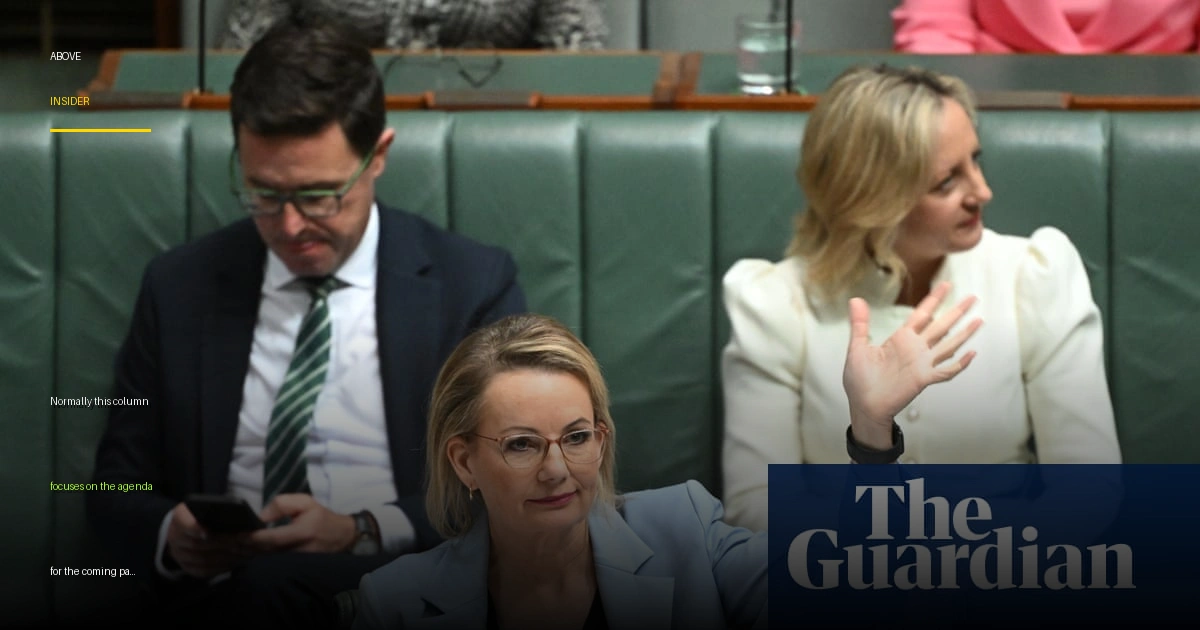
    Normally this column focuses on the agenda for the coming parliamentary week, unpacking a dense policy issue or two that will dominate the political discussion.

    This week is a little different. You would expect the government’s big agenda would be front and centre in the first regularly scheduled programming sitting week of the year – but not this Monday.

    Partly because, as of the time of writing, we know little about how the government plans to use its parliamentary superiority in 2026. But partly because, once again, all eyes will be on the Coalition – or lack thereof – as the opposition once again finds itself plumbing new depths.

    Who will sit on the frontbenches of the new Liberal-only opposition? How bare will those benches look? Are the Liberals and Nationals getting back together, or is their split more long-term? And with at least one party-room spill called for Monday, who will be in their leadership positions to start the week – let alone by the end?

    Sign up: AU Breaking News email

    Reduced from an already paltry 42 opposition members, the desertion of the 14 Nationals from the Coalition leaves Sussan Ley with an anemic 28 votes on her side of the chamber – herself included.

    Angus Taylor will be the spectre hanging over the Liberals all week, with even Ley’s backers privately saying they expect a leadership challenge before the sitting fortnight is out. Waiting any longer would risk the Coalition chaos dissipating, allowing Ley’s interim arrangements to be formalised, and giving challengers less of a foothold to launch their coup.

    David Littleproud faces a leadership challenge on Monday afternoon, which he’s expected to win, and there’s a chance he and Ley will meet before parliament on Tuesday to stitch the Coalition back together. But if that doesn’t happen, and the Liberals begin Tuesday with their current 28 members, it’ll be the barest opposition benches since the 1943 election – the year before the Liberal party formed. That time, the United Australia party and Country party combined for just 23 seats.

    If there’s a leadership spill, it’s anyone’s guess who ends up in the opposition’s big chair

    That, of course, was in a much smaller chamber of only 74 seats in the old Parliament House; the new House, opened in 1988, has never seen an official opposition as small as the Liberal-only one likely to trudge in on Tuesday. Unless the Liberals practise Covid-style social distancing, leaving spare seats and gaps, Ley will barely be able to fill the benches behind her in the chamber. There will be ample space for her senior team to spread out leisurely on the frontbench, at least, with extra room for the briefing notes for their new acting responsibilities.

    Ted O’Brien finds himself in the silly situation of being shadow treasurer, and also the assistant shadow treasurer. Meetings of the Coalition’s economic team may end up like the Spider-Man pointing at Spider-Man meme, or Bernard Black co-writing a book with himself, but at least O’Brien being his own assistant may make them run a little more smoothly.

    It leaves 28 Liberals, and 28 crossbenchers. It wouldn’t ever happen, but mathematically there’s a fantasy football scenario where a loose Nationals-teals-Greens-One Nation-Bob Katter-independents alliance makes a play to be recognised as the official opposition.

    Expect all these things to be ridiculed, relentlessly, by Labor in question time. We can almost hear the backbenchers delivering stilted dixer questions to various ministers about the “stability” of the government, and asking curiously about “any other approaches”. On Sunday, the health minister, Mark Butler, called it a “shambles”.

    The week will be a storm of leadership questions, impromptu doorstops from rarely seen Liberal or National backbenchers, and the staking out of offices, restaurants and bars to try to spot more meetings of Angus Taylor backers – or Pauline Hanson cooking steak dinners for any One Nation-curious conservative defectors.

    But while the emergency sitting week in January was a flurry of activity, negotiations and passage of complicated responses to antisemitism and the Bondi terror attack, the current legislation list for this week’s sitting looks a little more muted.

    Subject to change, the parliament will debate an in-the-weeds bill on copyright, excises on draught beer and fees in the Corporations Act. Other more consequential bills on migrant exploitation, the commonwealth Parole Board and veterans affairs are also scheduled.

    There is also a suggestion the government’s controversial changes to freedom of information legislation, including setting higher charges for documents and dramatically curbing access to government data, could return to the parliamentary agenda in coming weeks.

    For a Labor government that has claimed to be among the most transparent in history, to oversee major downgrades to the already-broken FoI system – based on claims, questionable at best, about AI flooding their systems – would be an alarming wielding of its parliamentary muscle.

    The bill passed the lower house, but was pulled from the Senate agenda late last year, though government sources say it remains alive. Speaking to my colleague Tom McIlroy this week, the shadow attorney general, Andrew Wallace, called it “friendless” and “a dog” of a bill, but conceded “never say never” when asked if the Coalition could back it.

    Of course if there’s a leadership spill, it’s anyone’s guess who ends up in the opposition’s big chair, let alone where they end up on a troubling degradation of one of the few systems journalists can use to learn about government decision-making.

    Politicians can also make FoI requests of their own, in a bid for political accountability. Maybe at some stage after this fortnight, the Liberal and National parties can get back to that brand of opposition politics, rather than writing new episodes in their never-ending soap opera.

    (Original content – AI unavailable)

    Source: Guardian

  • 15h ago 04…

    15h ago 04…

    15h ago 04.20 GMT Auction activity roars back after long weekend Auction activity has bounced back sharply this weekend, with 1,629 auctions scheduled. This is almost four times the 305 auctions held at the long weekend last week, and a jump on the 1,390 auctions that occurred at the same time last year. Based on results collected so far, CoreLogic’s summary found that the preliminary clearance rate was 69.7% across the country, but above the 59.4% actual rate in the final numbers. Across the capital cities: Sydney : 314 of 468 auctions with a preliminary clearance rate of 71.3%

    Melbourne : 489 of 643 auctions with a preliminary clearance rate of 69.3%

    Brisbane : 164 of 221 auctions with a preliminary clearance rate of 75%

    Adelaide : 101 of 153 auctions with a preliminary clearance rate of 86.1%

    Canberra : 123 of 135 auctions with a preliminary clearance rate of 39.8%

    Tasmania : One auction to be held.

    Perth: Eight auctions held. Share Updated at 04.37 GMT

    15h ago 04.11 GMT Why some economists go against the flow on RBA rate bet The Reserve Bank is widely tipped to become the first major central bank on Tuesday to U-turn from rate cuts to rate hikes in the post-Covid inflation era. A handful of economists are expecting the Reserve Bank of Australia to hold the cash rate steady at 3.6% when its board wraps up its first meeting of 2026 on Tuesday. The crux of his heterodox argument is that most analysts have focused on a rise in core inflation in the Australian Bureau of Statistics’ (ABS) long-running quarterly consumer price index series, the RBA’s preferred measure. But doing this ignores a downward trend in the ABS’s newly minted monthly data series, which shows inflationary pressures are more temporary than permanent, although the RBA has said it would pay less heed to the monthly measure while kinks were ironed out in the data. Money markets believe there is a high probability of a hike, implying a 70% chance of a 25-basis-point increase. While the decision dominates the week’s agenda, economists will also scrutinise building approvals data on Tuesday and Australia’s balance of trade, due Thursday. Federal politicians will grill RBA officials on their rate decisions on Friday, when its governor, Michele Bullock, deputy, Andrew Hauser, and three assistant governors front a committee hearing in Canberra. Wall Street investors are meanwhile trying to figure out what Donald Trump’s nomination to succeed the US Federal Reserve chair, Jerome Powell, will mean for interest rates. Its former governor Kevin Warsh should favour lower rates but stop short of more aggressive monetary easing linked to other potential nominees. – AAP Share Updated at 04.35 GMT

    15h ago 03.59 GMT Australia swelters through fourth hottest January on record Graham Readfearn Australians endured the country’s fourth-hottest January on record, with nationwide temperatures 1.9C above average, according to Bureau of Meteorology data. Last month marked the 24th consecutive January in which Australia’s mean temperature exceeded the long-term average from 1961 to 1990. View image in fullscreen Chart showing mean January temperatures in Australia from 1910 to 2026 Illustration: Bureau of Meteorology New South Wales had a standout month, with the data showing maximum temperatures were the second highest on the bureau’s record, which goes back to 1910. Maximums in South Australia were the third highest on record. Global heating caused mostly by burning fossil fuels has seen Australia warm by 1.5C since 1910. Australia experienced two heatwaves in January. Last week’s extreme heat set records tumbling in South Australia and Victoria, with multiple locations recording their highest-ever temperatures. Day and night, there’s no relief: five ways this heatwave is one of Australia’s worst on record Read more Share Updated at 04.20 GMT

    15h ago 03.43 GMT Laneway festival to host drug checking service as part of NSW trial Laneway festival will host an onsite drug checking service as part of an ongoing trial, it was confirmed on Sunday. Laneway will be the 11th festival to participate in the year-long trial when it begins next Sunday at Centennial Park. The service will be free and anonymous for festival patrons, allowing them to bring a small sample to be checked on-site by qualified health staff. Participants will be informed of the substance and its potency, along with guidance on how to reduce risks if they choose to use it. Trained peer workers are available on site to provide tailored guidance on risks, confidential support and information about additional support services. The NSW chief health officer, Dr Kerry Chant, said the service was intended to help people make informed decisions to reduce drug-related harm, but is not a guarantee of safety. This trial aims to inform individuals about substances, allowing them to avoid dangerous substances, discard high-risk drugs, make safer and more informed choices and potentially avoid serious health risks. Our priority is to reduce harm and keep people safe. The trial comes after the NSW Government’s Drug Summit concluded in December 2024. The summit’s report recommended a trial of music festival-based drug testing as a priority. Share Updated at 04.08 GMT

    16h ago 03.28 GMT ‘It’s not about democracy’: NSW attorney general doubles down on phrase ban The New South Wales state government remains determined to ban use of the phrase “globalise the intifada” despite most submissions to an inquiry about the move opposing the ban. When asked about the apparent opposition to the ban during a press conference on Sunday, the NSW attorney general, Michael Daley, contradicted a report that noted community opposition to the ban, saying, “I’m not sure that’s the case.” Daley noted that the inquiry received 700 submissions, of which 155 are public. It’s not about democracy. Just because a lot of people want to keep doing something that’s unacceptable doesn’t mean it’s the right thing for a government to do it. For more on this story, read the past report by Guardian Australia’s Penry Buckley: Inquiry calls for ban on ‘globalise the intifada’ in NSW – but only when used to incite hatred and violence Read more Share Updated at 03.40 GMT

    16h ago 03.07 GMT Josh Butler Greens blame government inaction on housing and price gouging for looming rate rise The Greens claim that Australians are facing an interest rate hike this week, in part, because the government hasn’t done enough to deal with rising housing prices and corporate price gouging. Greens leader Larissa Waters claims the Labor government should be doing more to manage those issues, in a bid to keep inflation down. If you’re a mortgage holder or a renter, you face being hit by the RBA to ‘fix’ the government’s ‘inflation problem’. Anyone with a mortgage will be giving more per month to the big banks. Renters are going to cop it as it will trickle down into unfair rent rises. It’s hard enough right now to get ahead, you shouldn’t be doing it harder. It shouldn’t be on you. This is about choices. The government’s priorities mean that you are copping the pain while banks, energy companies and property investors keep winning.” She added: If they’d taken them on, you wouldn’t be getting a rate rise. Greens’ economic spokesperson Nick McKim went on to say: This is about political choices, and Labor has chosen to protect corporate profits while ordinary people wear the pain. If the Reserve Bank increases interest rates the treasurer will wring his hands and pretend he shares people’s pain when in reality he is responsible for increasing pressure on the RBA to raise. Share Updated at 03.22 GMT

    16h ago 02.46 GMT NSW to remove ‘good character’ from being considered at sentencing hearings in nationwide first Offenders convicted of any crime will no longer be able to rely on glowing character references during sentencing under changes being introduced in New South Wales, in a move supported by survivors of sexual abuse but which others say could limit defendants’ rights. On Wednesday, the state government will become the first nationwide to introduce legislation to remove “good character” from being considered at sentencing hearings, when judges hear about someone’s prior record, general reputation and any positive contributions to society as mitigating factors. It follows a recommendation from a NSW sentencing council review released on Sunday, which was commissioned in April 2024 after a campaign by Your Reference Ain’t Relevant to remove good character references during sentencing for child sex offenders. For more on this story, read the full report by Guardian Australia’s Penry Buckley: NSW to remove ‘good character’ from being considered at sentencing hearings in nationwide first Read more Share Updated at 03.22 GMT

    17h ago 02.29 GMT Victoria flips Metro Tunnel’s ‘big switch’ as new services begin Sunday marks the day Melbourne’s $15bn Metro Tunnel will begin service in what the Victorian state government is calling “the big switch”. New timetables with extra services that use the Metro Tunnel – first announced in 2015 and opened in November – will begin from Sunday. The state government says the services will reduce congestion on the network and will also involve changes to bus routes in regional Victoria and inner-city Melbourne. View image in fullscreen State Library station is one of five new Metro Tunnel stations. Photograph: Erik Anderson/AAP Share Updated at 02.42 GMT

    17h ago 02.13 GMT ‘Changed me’: deputy leader back after cancer fight The NSW deputy premier is returning to work for the new school year after her second cancer battle in three years. Prue Car, who is also the minister for education and early learning, went on leave in June after revealing she had been diagnosed with breast cancer. The 43-year-old mother said it had been a difficult seven months, but she would be back at work on Monday to kick off the new school year. View image in fullscreen Prue Car. Photograph: Dan Himbrechts/AAP In a video message on Sunday, she said the experience had “certainly changed me in so many ways”. What hasn’t changed is my unwavering commitment to deliver for the people of NSW, for this beautiful community I represent here in western Sydney, as well as continuing our program in education. I can’t wait to get back to work. Car entered state parliament in 2015 for the western Sydney seat of Londonderry and has been deputy premier since Labor won government in March 2023. The NSW MP remained deputy premier during her treatment but stepped back from her ministerial duties in education and early learning and western Sydney, handing the reins to fellow minister Courtney Houssos. It was Car’s second major health battle, having taken leave in 2022 after an unrelated kidney cancer diagnosis. – AAP Share Updated at 04.00 GMT

    (Original content – AI unavailable)

    Source: Guardian
  • “If it’s through attack or through other means, I don’t know…

    “If it’s through attack or through other means, I don’t know…

    “If it’s through attack or through other means, I don’t know, but certainly we should leverage the situation to switch regimes. It won’t be the first time we’ll deal with the bombs – it’s not nice, but if it’s going to help us in the longer term to feel safer here then we will have to go through it”.

    (Original content – AI unavailable)